Where to stay · Boutique
The Packinghouse Inn
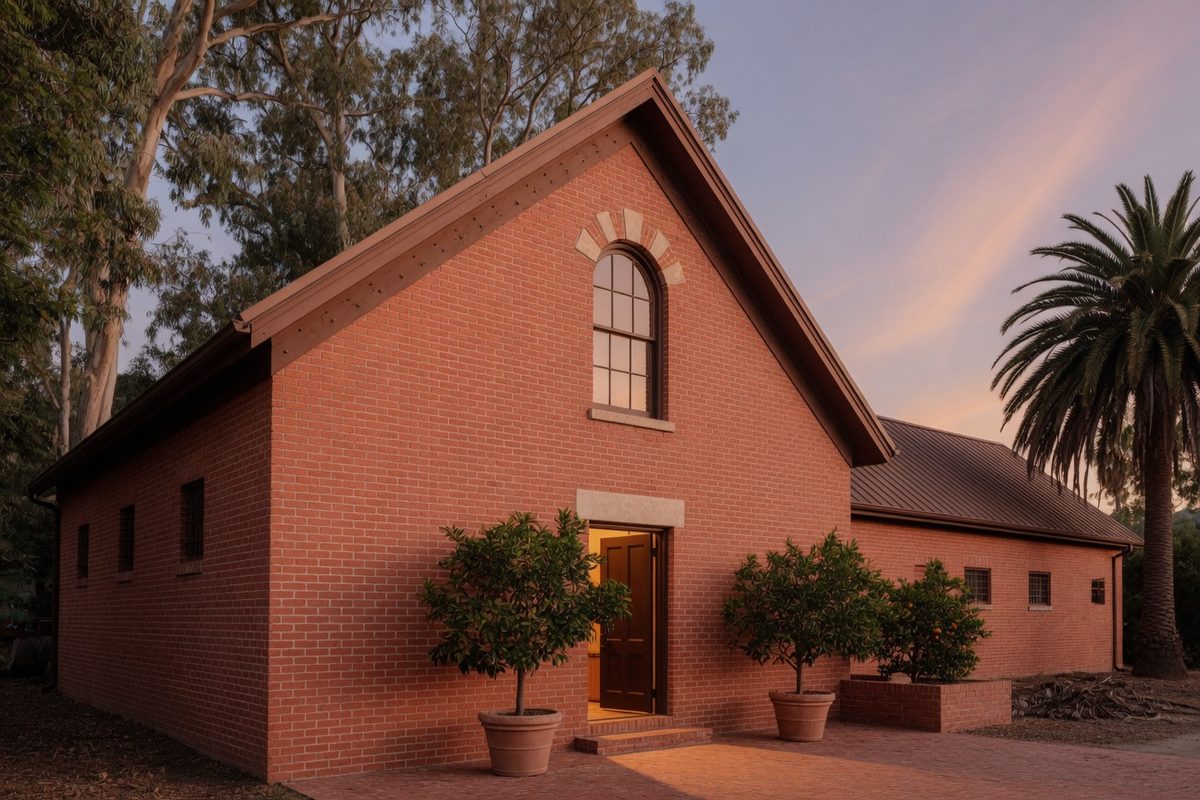
A 1910s brick citrus packinghouse in Redlands reborn as an 18-room boutique inn — timber trusses, exposed brick, and rooms named for historic crate labels.
The building was never meant to be beautiful. It was built around 1912 to do one thing — receive oranges by the wagonload, wash and grade and wrap them, and pack them into crates bound for the rail spur and the markets back East. That it is now one of the most quietly handsome places to stay in Redlands is a happy accident of good bones: the people who built packinghouses built them to carry weight, and a century later the weight they carry is atmosphere.
The feel of the space
You enter through what was the loading floor, into a long high-ceilinged room where the original timber roof trusses are still doing their work overhead — great riveted bolts of Douglas fir, dark with age, spanning a space that no contemporary boutique hotel would dare leave so open. The brick is exposed and unpainted, soft red shading to soot near the old equipment lines. Copper pendant lights hang low over the front desk, which is faced in reclaimed citrus-crate wood, the stenciled grade marks still faintly legible if you look. The effect is industrial without being cold; the building is too honest for that.
What the building was
Redlands sat at the heart of the navel-orange district, and packinghouses like this one lined the rail corridors through the early twentieth century, each tied to a grower cooperative or a local packing brand. The architecture of the trade — high clerestory windows for north light, wide doors sized to a horse-drawn wagon, floors pitched almost imperceptibly toward drains — survives all through the inn if you know what to look for. The University of California’s agricultural history program, UC ANR, documents how central these buildings were to the citrus economy; standing under the trusses, the scale of that vanished industry is easy to feel.
What to book
There are eighteen rooms, each named for a historic citrus crate label — the bold lithographs that growers used to brand their fruit, with names that ran from the genteel to the frankly mythological. The rooms vary considerably with the building’s old geometry; some tuck under the slope of the roof, others open onto the clerestory light. Book a corner room if you can. They take light from two directions, and in the late afternoon the brick warms to a color you will want to photograph and will fail to capture.
Nearby
The inn sits within an easy walk of the Redlands historic district, one of the best-preserved early-twentieth-century streetscapes in the region — Victorian and Craftsman houses built, like everything else here, on orange money. The City of Redlands maintains a walkable downtown of independent shops and cafés, and the jacaranda trees that line the residential streets put on a violet show in late spring. A grove dinner or a counter-diner slice of Valencia pie is minutes away.
Why we recommend it
Because adaptive reuse is usually a compromise and this is not. The building’s working past is the entire point of staying here — you sleep inside the machine that made the region’s fortune, under the trusses that held its roof up while the oranges moved through below. It is intimate where the grand hotels are theatrical, and it tells its history in brick and timber rather than on a plaque. Ask for a corner room, and arrive in time for the afternoon light.